
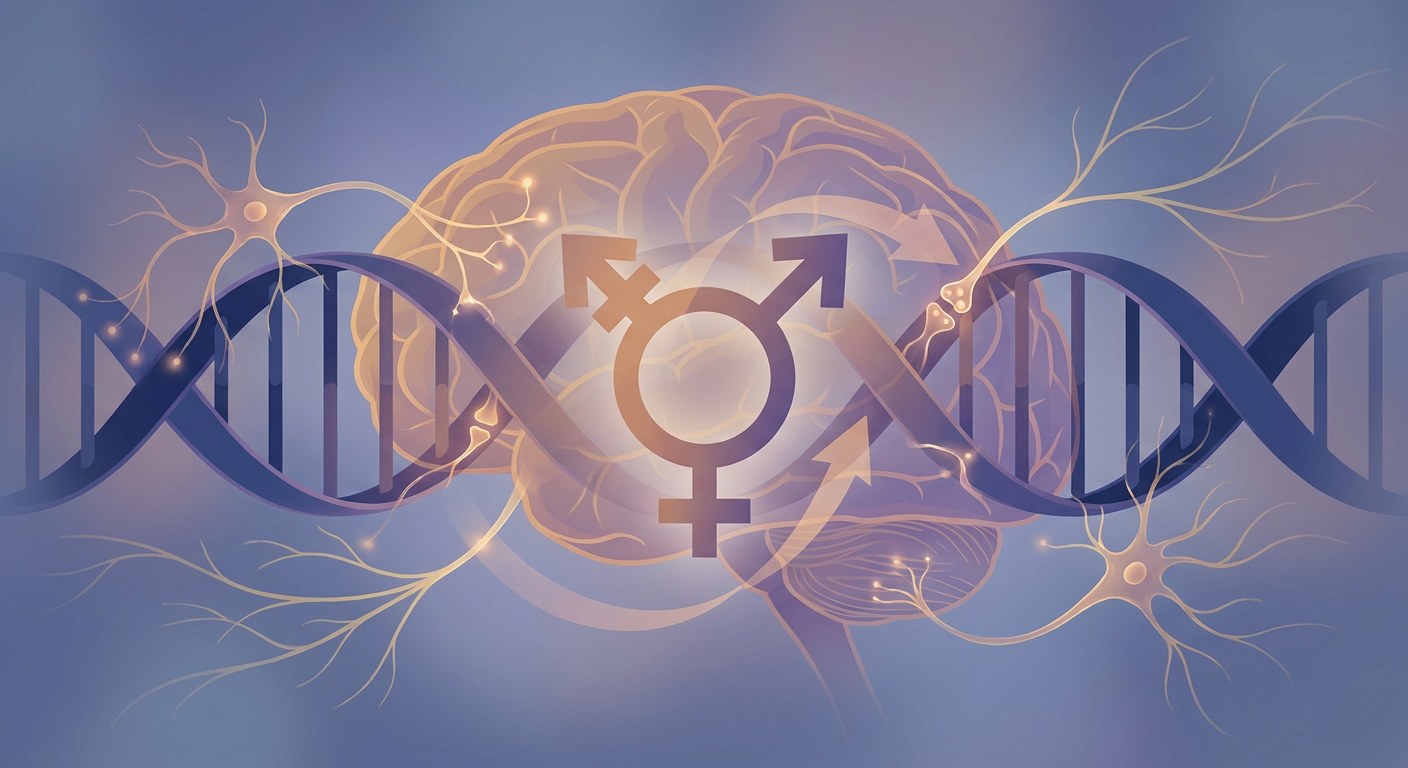
Gender identity has a biological basis that science is only beginning to unravel. A new genetic study adds another piece to that puzzle: transgender women carry more rare variants in a family of genes involved in nervous system development, the so-called PCDH genes.
The researchers sequenced the exome — the part of the genome that codes for proteins — of 24 transgender women and 22 cisgender men, and compared the burden of rare, potentially damaging genetic variants between the two groups.
The result was striking. In total, 38,524 genetic variants were identified, of which 2,441 were rare and predicted to be functionally significant. When the researchers analyzed which biological functions those variants concentrated in, a statistically enriched group emerged: homophilic cell adhesion — the mechanisms by which neurons recognize and connect to each other.
Within that group, the PCDH genes, a family of protocadherins, stood out. Thirty-seven rare variants were found in 21 PCDH genes, and 36 of them were confirmed by Sanger sequencing. The difference between groups was clear: transgender women accumulated more than three times as many functionally significant variants in these genes as cisgender men.
Why do protocadherins matter? They are cell adhesion molecules essential for brain wiring: they help neurons establish the correct connections during development. Variants that alter their function could therefore influence how the brain is configured, including circuits related to identity.
The authors stress that this is an exploratory study with a small sample, and that the results must be confirmed in larger cohorts. But the direction of the finding is consistent with the hypothesis that gender identity has a genetic and neurobiological component.
This work adds to the growing evidence that gender dysphoria is not a matter of choice or environment, but is rooted in developmental biology. Understanding these mechanisms not only expands scientific knowledge, but also helps dispel prejudice and ground clinical care in data.
The genetics of gender identity remains a young field, with more questions than answers. But each study like this one brings the map of a territory that remained in the shadows for decades a little closer.