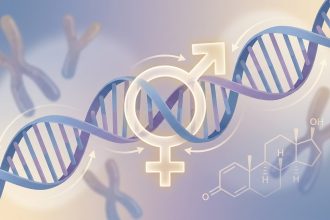

Can certain genes explain part of gender dysphoria? Genetics has spent years trying to answer this question and accumulating clues. The latest comes from a Turkish team, which analyzed the DNA of a group of transgender men and found rare variants in genes linked to the sexual differentiation of the brain. The results were published in Sexual Development (Karger), a journal specialized in sexual development.
Cell adhesion: the brain’s glue
Cells communicate and stay together thanks to proteins called cell adhesion molecules. Without them, the brain could not form its circuits with precision. And it turns out that a large part of the genetic variants detected in this study belong precisely to that group of genes.
The researchers sequenced the exome (the part of DNA that contains the instructions for making proteins) of eight transgender men. They then compared the findings with variants already described in the scientific literature related to gender identity.
Genes shared between trans men and trans women
The team identified 30 variants in 18 genes that had already appeared in previous studies. What is striking is that several of them coincide with those found earlier in transgender women. This is the case, for example, of the variant rs879121178 in the GOLGA8J gene, previously described in a trans woman, and of rs548940626 in the PCDHA8 gene.
When they analyzed all the data together, the functional group with the greatest weight was cell adhesion. The most enriched term was homophilic adhesion through plasma membrane molecules, with 54 genes involved.
What does this mean for gender identity?
These genes are involved in the development and plasticity of the nervous system, that is, in how the brain is configured and adapts. The authors propose that rare variants in these pathways could influence the sexual differentiation of the brain and, consequently, the formation of gender identity.
The study is small in size and its authors present it as an initial approach. But it adds an important fact: the same genes appear to be involved in both transgender men and women, which reinforces the idea that there is a shared genetic component behind dysphoria.
A still incomplete puzzle
Gender identity is a complex phenomenon involving genes, hormones and environment. Studies like this add one more piece to the puzzle: they point to the biology of brain development as a key area of research.
Larger samples and functional studies are needed to confirm whether these variants truly alter the behavior of proteins. But every step brings science closer to better understanding the biological bases of gender identity.
Source: Cura DO, et al. Rare Genetic Variants of Cell Adhesion Molecules in Transgender Men Suggest a Potential Role in Gender Dysphoria. Sexual Development, 2025. DOI: 10.1159/000549011.
Article published on dosier.es. Image generated with artificial intelligence (marta ai → marta.syf.es).