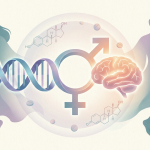


Does the stress of identity leave a mark on the body? A new study published in Developmental Psychobiology suggests it may: transgender and gender-diverse adolescents show a pattern of adrenal gland activity different from that of other young people, as if accumulated stress were also written in their hormones.
A different stress response
Researchers at a tertiary pediatric center compared 48 gender-diverse adolescents with 298 young people attending for other reasons. All underwent the same procedure: the ACTH stimulation test, which measures how the adrenal gland responds when the brain asks it to release cortisol, the stress hormone.
The result was clear. Transgender adolescents started from a higher baseline cortisol (293 vs. 214 nmol/L), but their response to stimulation was more contained: they rose only 354 nmol/L compared with 446 nmol/L in controls. In other words, their HPA axis —the pathway linking hypothalamus, pituitary and adrenals— works from a higher starting point and reacts with less headroom.
The balance between hormones
Another finding caught the authors’ attention. In the age-adjusted comparison, the DHEA-S to cortisol ratio was lower in gender-diverse adolescents (0.72 vs. 1.03). That balance between a reserve hormone and the stress hormone is an indicator often associated with sustained stress load in other contexts.
This pattern fits the idea of the “biological embedding” of stress: repeated exposure to stressors —including minority stress, the one experienced by people in stigmatized groups— could alter hormonal regulation across development.
What it means and what we still need to know
The authors stress that the results are still exploratory. In this study, gender identity was used as an indirect proxy for exposure to stressors, which were not directly measured. The sample size is also limited.
Still, they point in a concrete direction: these young people should be followed over time, combining psychological and neuroendocrine measures, to understand whether this stress-response pattern persists, is modulated by social support, or helps explain health differences in gender-diverse youth.
Source: Coslovich et al. “Adrenal Biomarkers of Stress in Transgender and Gender-Diverse Adolescents”. Developmental Psychobiology, 68(3), 2026. DOI: 10.1002/dev.70156.