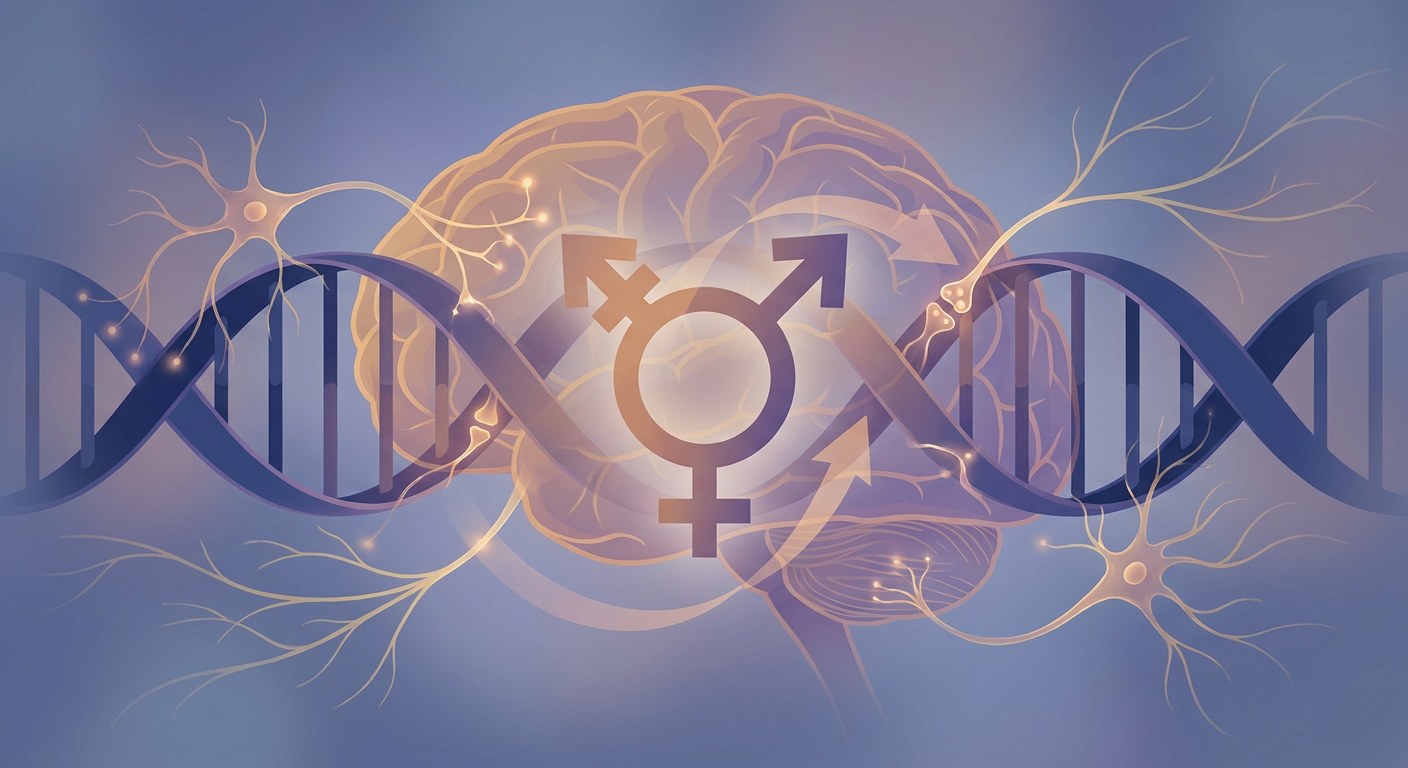


A new study published in 2026 in the journal Neuroscience has examined cortical structure and brain size in transfeminine individuals from Thailand, comparing them with cisgender men and women. It is the first analysis of its kind focused on a sample of Asian origin, which notably expands the available database on the brain and gender identity beyond European and North American settings.
What was compared
The research included 140 adults, among them transfeminine individuals with and without gender-affirming hormone treatment, cisgender heterosexual men, cisgender women and gay men. Using structural magnetic resonance imaging, cortical thickness, surface area, volume and total brain size were measured, and their relationship with sex assigned at birth, gender identity and hormone use was analyzed.
Main findings
The results show that brain size and several cortical measures in transfeminine individuals fall in an intermediate position between cisgender men and women, with differences associated with hormone treatment. The authors stress that brain structure is a continuum and that these findings should be interpreted with caution, without attributing direct causality.
The study reinforces the idea that both biology and the hormonal environment contribute to observable brain differences, and highlights the need to include diverse populations in research on the brain and gender identity.
Bibliographic reference: Cortical structure and brain size in Thai transfeminine individuals with and without gender-affirming hormone use compared with cisgender men, cisgender women and gay men. Neuroscience, 2026. DOI: 10.1016/j.neuroscience.2026.07.051.
Publication consultation: Original article on ScienceDirect