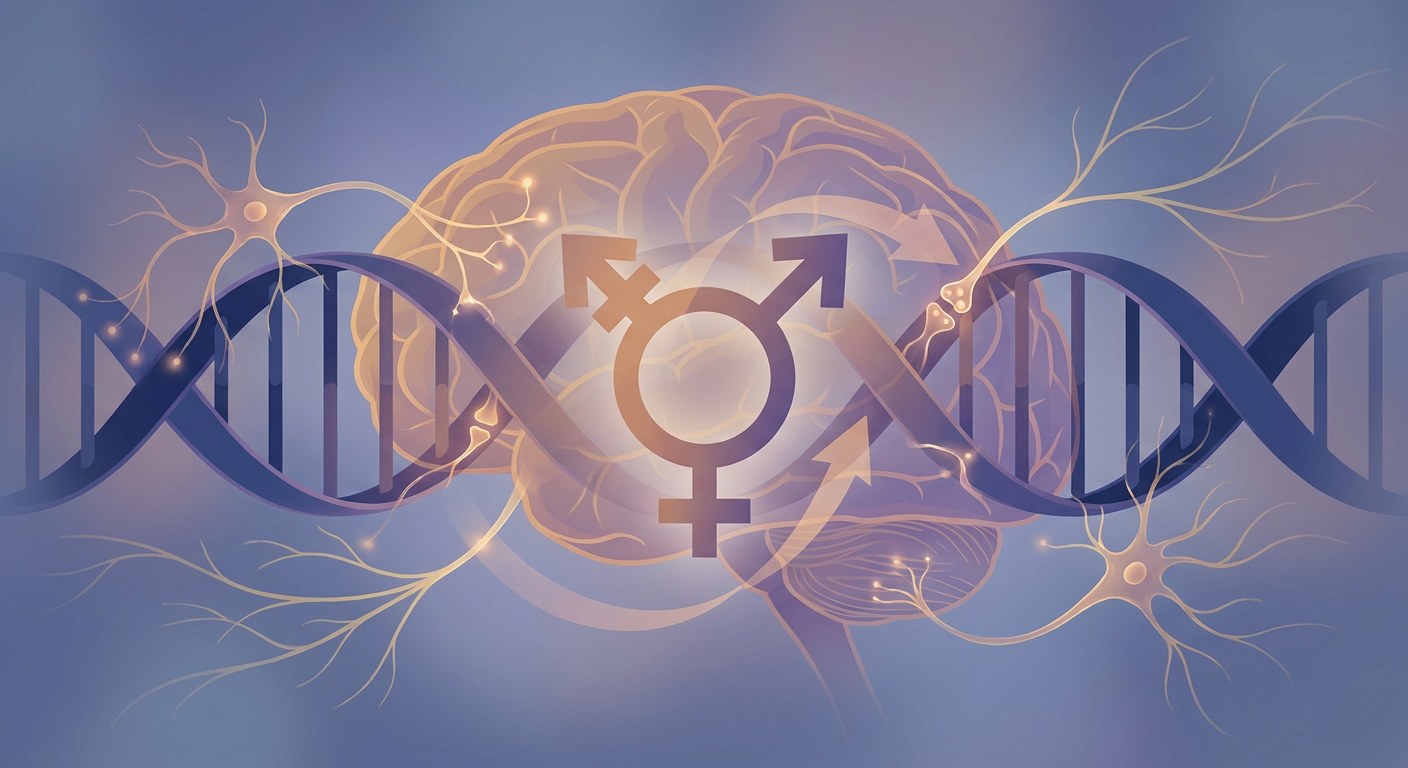

A genetic study published in Sexual Development (Karger) analyzes rare variants in cell adhesion molecule (CAM) genes in transgender men and suggests a possible role in gender dysphoria.
Cell adhesion molecules are essential for neuronal migration, synaptogenesis and the wiring of the nervous system during development. The authors’ hypothesis is that alterations in these proteins could influence the establishment of brain circuits related to the perception of gender identity.
Using targeted sequencing analysis, the researchers identified potentially pathogenic rare variants in genes involved in cell adhesion and cerebral cortex development. These variants were found to be enriched in the study population compared with controls, although with sample sizes that warrant caution.
The authors contextualize the findings within the neuroevolutionary model of gender identity and highlight the interaction between cell-contact-dependent signaling and sexual differentiation of the brain. They note, nevertheless, that functional studies and replication in independent cohorts are needed.
The work expands the spectrum of candidate genes beyond the classical hormone receptors, incorporating neuronal development biology as a relevant axis in the genetic architecture of gender dysphoria.
Bibliographic reference
Onur Cura D, et al. Rare Genetic Variants of Cell Adhesion Molecules in Transgender Men Suggest a Potential Role in Gender Dysphoria. Sex Dev. 2025;19(1-6):56-63.
DOI: https://doi.org/10.1159/000549011
PMID: 41208545
Publication access: the original reference can be consulted in open access or through the indicated DOI.