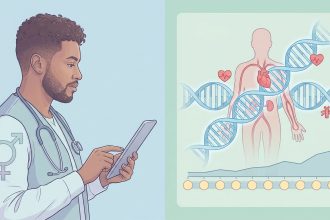

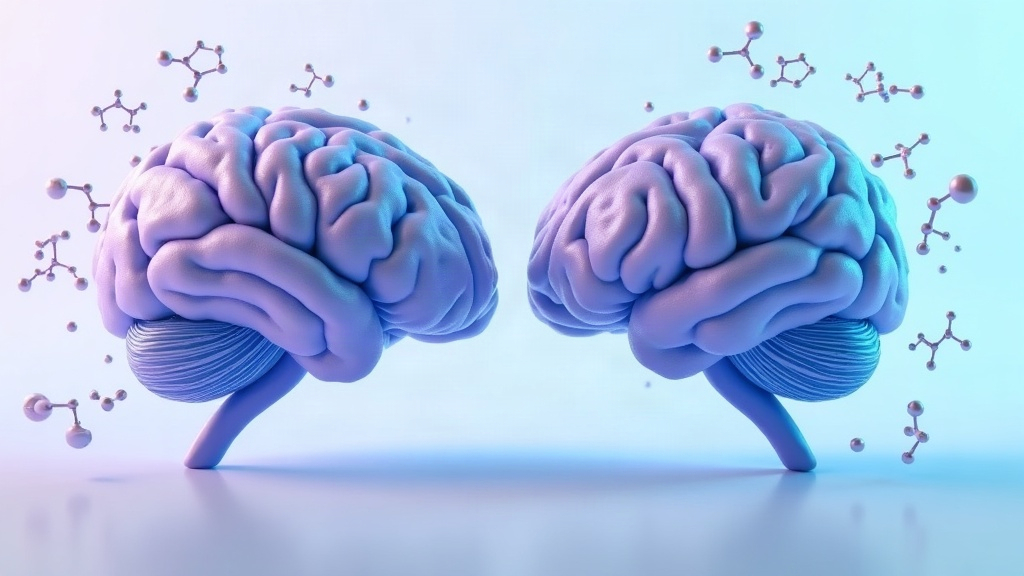
Can gender-affirming hormone treatment modify the personality traits of a transgender person? A recent study, published in 2026 in the journal Comprehensive Psychoneuroendocrinology, addresses this question with a prospective design: it measured the personality of 58 adults before starting hormone therapy and again after at least six months of treatment. The result, despite limitations, suggests that sex hormones can accompany subtle changes in the way people feel, react, and behave, shifting in the direction of the typical differences between men and women.
Personality is usually considered a set of relatively stable traits in adulthood, but there are well-documented mean differences between cisgender men and women. For example, women generally score somewhat higher on traits such as agreeableness or neuroticism. The question posed by the authors of Mats Holmberg’s team, from the Karolinska Institute in Stockholm, was whether exposure to estrogen or testosterone in transgender people could bring their psychological profile closer to that of their felt gender. To answer it, they used the NEO-PI-R questionnaire, based on the well-known “Big Five” model: neuroticism, extraversion, openness, agreeableness, and conscientiousness.
The participants were divided into two groups: 34 people assigned female at birth who received testosterone and 24 people assigned male at birth who received antiandrogens and estradiol. To better isolate the hormonal effect, those with psychiatric or autism spectrum disorders, or who used antidepressants, were excluded. Before treatment, the group assigned female at birth already scored higher on agreeableness and on certain specific facets, such as excitement seeking and straightforwardness. After six months, those who took testosterone showed a decrease in neuroticism and in facets such as depression and vulnerability, as well as an increase in the willingness to try new activities. Meanwhile, the group treated with estradiol experienced an increase in the “feelings” facet, that is, greater receptivity to their own emotions.
A particularly interesting piece of data is the correlation between hormonal and psychological changes. In the estradiol-treated group, larger increases in this hormone in the blood were associated with lower scores on some dimensions, an unexpected and somewhat contradictory finding with respect to usual sex differences, which the authors interpret cautiously. In addition, after treatment the largest difference between the two groups was observed in vulnerability: the testosterone group reduced it significantly, while the estrogen group showed no changes, widening the initial gap between the two groups.
The researchers are cautious in interpreting these results. The sample is small, no untreated control group was included, and follow-up was limited to the first six months. This makes it impossible to clearly distinguish between the biological effects of the hormones and the psychological effects of the social transition process itself: the relief of gender dysphoria could improve mood and reduce neuroticism regardless of the chemical changes. Even so, the study adds a new piece of evidence on how sex hormones can influence the personality of people with gender incongruence, a field still little explored and one that the authors propose to continue investigating.
Bibliographic reference: Holmberg M, Wallen A, Savic I. The effect of gender-affirming hormonal treatment on personality traits – a NEO-PI-R study. Comprehensive Psychoneuroendocrinology. 2026;25:100338. DOI: 10.1016/j.cpnec.2026.100338. PMID: 41704624.
Article page: https://www.sciencedirect.com/science/article/pii/S2666497626000020