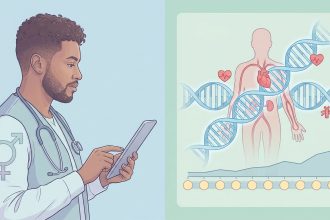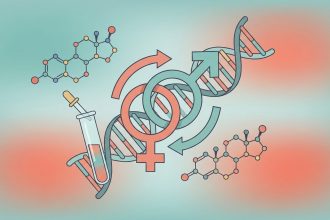

What happens to the set of proteins circulating in the blood when a transgender person begins feminizing hormone therapy? An international team led from the Murdoch Children’s Research Institute in Melbourne has published in Nature Medicine the most complete description to date of how the plasma proteome changes during treatment with estradiol and antiandrogens. It is the first time a study with this level of molecular detail, published in a high-impact journal, has mapped the proteins that respond to gender-affirming hormone therapy.
To carry it out, the researchers analyzed the plasma proteins of forty transgender people (assigned male at birth) during the first six months of treatment with estradiol, combined with two types of antiandrogens. They used two large-scale affinity proteomics techniques, capable of detecting thousands of proteins at once, and compared the samples before and after treatment. The aim was to identify which proteins changed and to what extent, in order to better understand the biological effects of sex hormones on the human body.
The result is a catalog of hundreds of proteins whose concentration changes significantly. Among the most notable changes are those related to lipid metabolism, blood clotting, inflammation, and the immune system. Some of these proteins were already known for their role in sexual dimorphism — that is, in the biological differences between men and women — and this study shows that, after hormone therapy, their levels shift toward the typically female pattern. This finding reinforces the idea that sex hormones are powerful regulators of a very broad part of the body’s functioning, far beyond the reproductive organs.
One of the most relevant aspects for clinical practice is the variability between people. Although the general direction of the change was consistent, the magnitude of the protein response differed considerably from one individual to another. This suggests that genetic and environmental factors modulate how each organism responds to the same dose of hormones, opening the door to a more personalized approach to hormone therapy in the future: knowing each patient’s protein profile could help adjust the treatment and anticipate side effects.
The authors stress that these results should be interpreted with caution. The sample is relatively small, follow-up was limited to half a year, and no untreated control group was included, so some changes could be due to factors other than hormones. Even so, the work provides a very valuable reference database and raises numerous new hypotheses: understanding which proteins change and why will help clarify both the benefits and the risks of gender-affirming hormone therapy, a field in which much remains to be investigated.
Bibliographic reference
Nguyen NNL, Celestra D, Angus LM, et al. Plasma proteome adaptations during feminizing gender-affirming hormone therapy. Nat Med. 2026;32(1):139-150.
DOI: 10.1038/s41591-025-04023-9
PMID: 41115957
Article page: Nature Medicine and PMC.