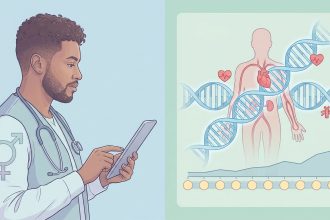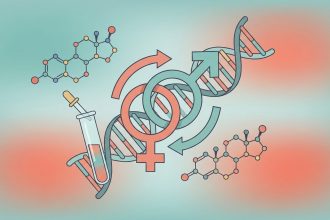

Sex hormones influence many bodily processes beyond sexual characteristics, and one of the most relevant is insulin sensitivity—that is, the ability of cells to respond to this hormone and take up glucose from the blood. A team from the Centre of Expertise on Gender Dysphoria at Amsterdam UMC (the Netherlands), together with researchers from the University of Washington and the University of Colorado, has published in the journal The Journal of Clinical Endocrinology & Metabolism a study analyzing what happens to insulin sensitivity when transgender people start hormone therapy.
The study is observational and prospective: 29 people beginning hormonal treatment were followed, 16 on feminizing therapy (estradiol with a GnRH analogue) and 13 on masculinizing therapy (testosterone). To measure insulin sensitivity, the reference technique, the hyperinsulinemic euglycemic clamp, was used, and blood plasma proteins were also analyzed before and after three months of treatment in order to search for associated molecular mechanisms.
The results show clear differences depending on the type of therapy. After feminizing therapy, insulin sensitivity increased significantly (by about 23% in the main index), whereas with masculinizing therapy no changes were observed. Proteome analysis revealed dozens of proteins whose concentration changed (49 during feminizing therapy and 356 during masculinizing therapy), and 16 of them correlated with the changes in insulin sensitivity. Among these, proteins involved in inflammation and immunoregulation, iron metabolism, and the response to oxidative stress stand out.
The authors interpret that the elevated estradiol and low testosterone concentrations that accompany feminizing therapy could contribute to better insulin sensitivity, an effect consistent with the lower prevalence of insulin resistance observed in women compared with men. They stress that these findings, in addition to providing information on the metabolic impact of sex hormones, may guide precision medicine better tailored to each person’s sex.
This is a study of modest size, as its own authors acknowledge, so the results must be confirmed in larger cohorts and with longer follow-ups. Even so, it provides rigorous data obtained with a measurement technique considered the gold standard, and contributes to an area in which human evidence remained limited: the effect of hormone therapy on glucose metabolism in people with gender incongruence.
Bibliographic reference:
van Eeghen SA, Pyle L, Narongkiatikhun P, Choi YJ, Vosters TG, van Valkengoed IGM, Bjornstad P, Siegelaar SE, Nokoff NJ, den Heijer M, van Raalte DH. Insulin Sensitivity and Associated Plasma Proteomics During Sex Hormone Therapy. The Journal of Clinical Endocrinology & Metabolism, 2026;111(4):e1070-e1079. DOI: 10.1210/clinem/dgaf573. PMID: 41120110.