
For a long time, sex has been discussed as if it were a switch that can only be in two positions. The genetics of development, however, tells a more nuanced story. An international team coordinated by Helena Fabbri-Scallet, from the State University of Campinas (Brazil), with the participation of German groups from Lübeck, has published in Scientific Reports one of the most detailed analyses to date on what happens inside the gonads when sex development does not follow the usual path.
What differences of sex development are
When a person is born with a combination of chromosomal, gonadal or anatomical characteristics that does not fit the classical definition of “male” or “female”, specialists speak of differences of sex development (DSD). These are rare conditions, with more than a hundred known genetic causes, and their study is key not only for clinical diagnosis, but also for understanding the molecular mechanisms that determine the biological identity of sex.
What the researchers did
Rather than staying on the list of genes, the team analyzed gene expression: that is, which genes are active or silenced within the gonadal tissue in each situation. They reviewed the transcriptomes (the set of messenger RNA produced by a cell) of testicular and ovarian tissue from people with different DSD phenotypes, both 46,XY and 46,XX.
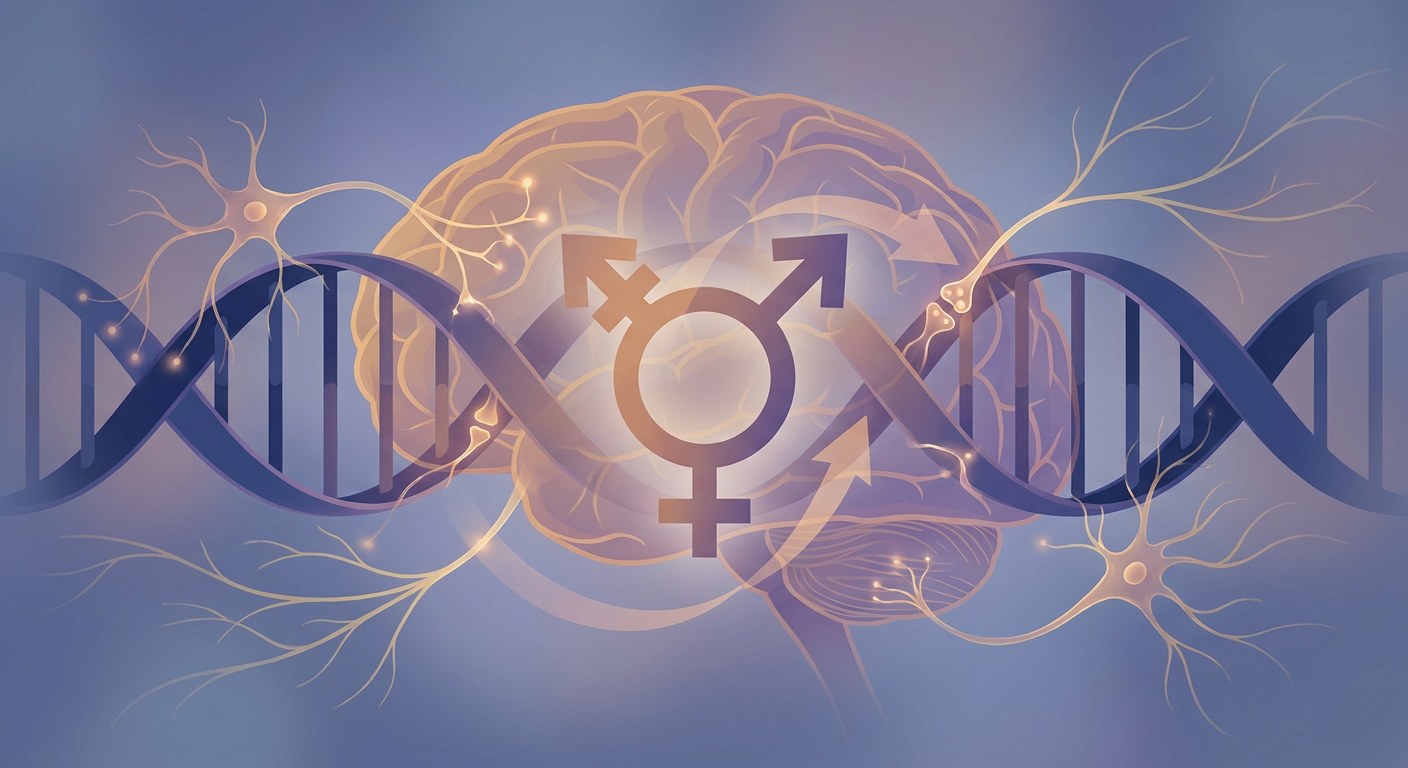
The underlying idea is simple and powerful: gonadal sex does not depend only on the presence of the Y chromosome or the SRY gene, but on an entire network of genes that switch on and off in a coordinated way.
The main findings
The analysis showed clearly distinct gene expression profiles according to gonadal phenotype. In samples from 46,XY people with atypical development, the researchers observed a reduction in ovarian markers and a dysregulation of testicular factors. In other words: the gonads do not work as “testis or nothing”; there are intermediate states with their own molecular signature.
This result fits with the idea that gonadal differentiation is a dynamic and gradual process, in which many genes must coordinate. When one of them fails, the tissue can remain halfway, and that intermediate state has clinical consequences and also for the biological identity of the person.
Why it matters for research on gender identity
The study does not speak directly about gender identity, but it does contribute an important piece to the genetic map of human sex development. Understanding which genes govern gonadal differentiation helps researchers who study the biological substrate of gender dysphoria, because both fields share the same molecular pathways: sex hormones and their receptors.
The scientific community stresses that gender identity and gonadal development are distinct phenomena, but both depend on the coordinated expression of genes involved in the hormonal axis. Knowing that axis better is a necessary condition for advancing on the remaining questions.
What it means in practice
For the clinic, these molecular profiles could in the future help refine the diagnosis and prognosis of people with DSD, better anticipating what to expect from each genetic variant. For basic science, they confirm that the biology of sex is a far more complex gradient than the classical dichotomy suggests, and that the genes of gonadal differentiation deserve further exploration.
Bibliographic reference:
Fabbri-Scallet H, et al. Exploring the underlying gene expression profiles of differences of sex development phenotypes through transcriptome analysis. Scientific Reports 2026. DOI: 10.1038/s41598-026-38435-5. PMID: 41688582.
Publication reference: Scientific Reports and PubMed Central.