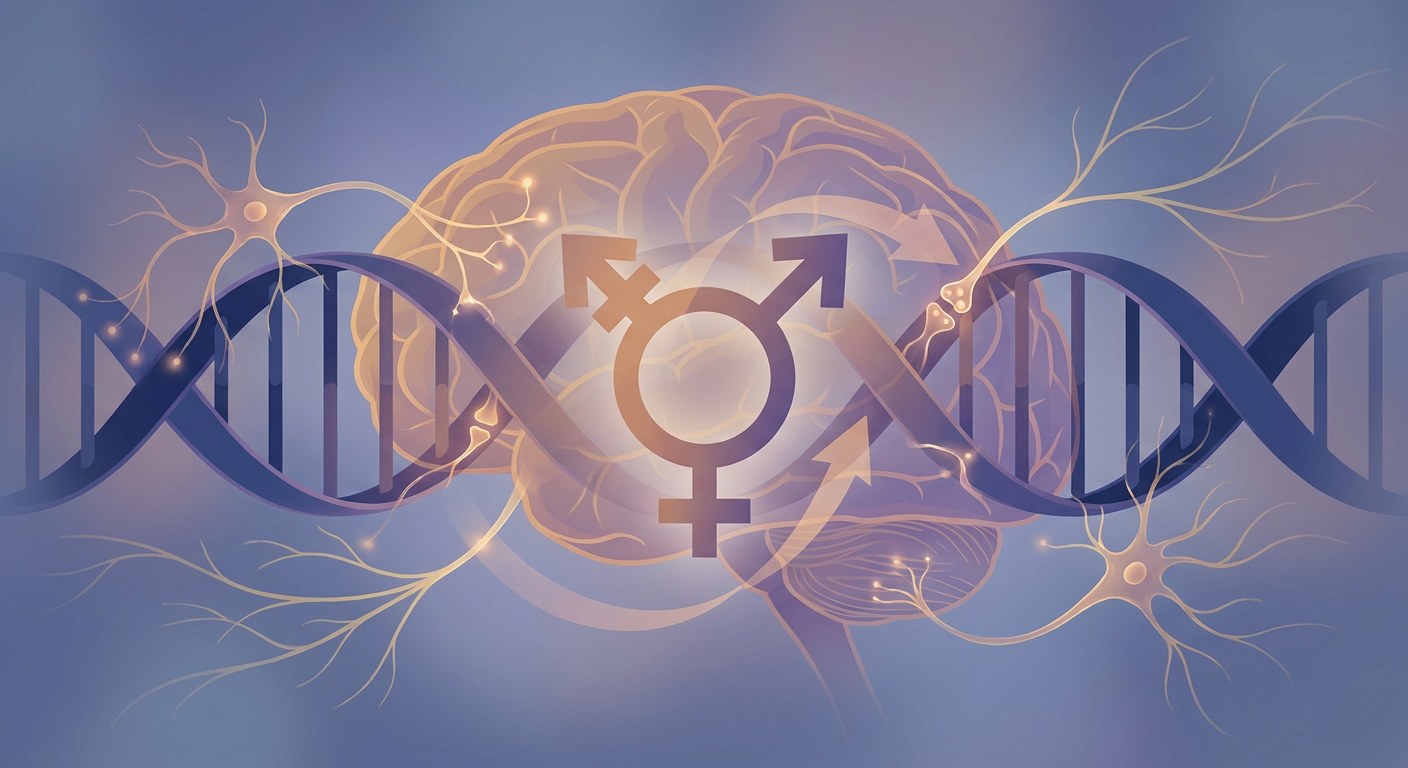

The human body does not treat testosterone and oestradiol as mere messengers of reproduction: these hormones travel throughout the organism and also communicate with the immune system. A group of researchers from the University of Florence (Italy) has reviewed the most recent evidence on how gender-affirming hormone therapy remodels the defences, the microbiota and cellular metabolism. The study has been published in Biology.
A unique window onto the human body
For decades, immunology compared men and women as if they were two closed boxes. But gender-affirming hormone therapy offers a natural model for separating two variables that almost always go together: chromosomal background and exposure to sex hormones.
When a person begins treatment with oestrogens or testosterone, hormone levels change profoundly. Observing what then happens to the immune system makes it possible to distinguish which effects truly depend on hormones and which are independent of them.
What testosterone and oestradiol do to the defences
The review describes that the two hormones act in almost opposite ways on immune cells. Testosterone tends to dampen the type-I interferon antiviral response and to curb certain T-cell populations. Oestradiol, by contrast, tends to intensify the inflammatory response and favour macrophage activation.
These effects do not depend on a single mechanism. The hormones act through their receptors — androgen and oestrogen receptors — both on the cell surface and inside the cell, and modify which genes are switched on or off. In fact, epigenetic remodelling has been observed: chemical changes on the DNA that alter gene activity without touching the sequence of the genetic letters.
Metabolism, a key intermediary
One of the most suggestive findings is that androgenic signalling acts as a metabolic brake on certain immune cells. Testosterone limits glutamine consumption in Th17-type helper T cells, a fuel essential for their activation.
As a consequence, the circulating metabolome — the set of small metabolic molecules in the blood — changes during treatment. This turns metabolite analysis into a sensitive tool for tracking, in real time, how the immune system adapts to the new hormones.
The gut and the mucosae also change
Hormones do not only act on individual cells: they remodel the body’s barriers and their microbial communities. The review reports that feminising therapy is associated with a greater abundance of bacteria that produce short-chain fatty acids, such as butyrate, which strengthen the intestinal barrier.
In the opposite direction, masculinising therapy has been linked in some studies to changes in the microbiota and to greater intestinal permeability. These changes have implications for reproductive health, susceptibility to infections and long-term mucosal inflammation.
What all this means
The overall conclusion is that human immunity is far more flexible than the classical binary model suggested. The immune system is not fixed by chromosomal sex, but responds dynamically to the hormonal context.
The authors stress that understanding this plasticity helps to care better for the health of trans people and, at the same time, to understand the basic mechanisms by which sex hormones shape the defences in all people.
Source
Review article published in Biology (MDPI): Beyond the Human Binary: Decoding Hormone-Immune Plasticity in Transgender Health. Cembalo G, Turrini M, Baldi S, Amedei A. 2026. DOI: 10.3390/biology15141187.
Footer: dosier.es + marta ai→marta.syf.es