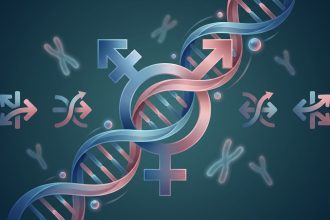


A review published in Anales de Pediatría (Elsevier), with the participation of researcher Rosa Fernández among its authors, addresses a central question in the scientific and clinical debate: whether there is a demonstrable biological component in gender identity.
The article synthesizes the evidence coming from genetics, epigenetics, neuroimaging and developmental endocrinology. Genetic association studies, DNA methylation analyses in populations with gender incongruence, and neuroimaging findings on brain organization are reviewed.
The authors conclude that the accumulated evidence points to gender identity being a complex and multifactorial trait, in which genetic, epigenetic, hormonal and environmental factors are involved. They stress that, to date, there is no single biological marker nor a genetic determinism that explains gender dysphoria.
The review insists on the need for rigorous approaches and on avoiding both biological reductionism and the denial of empirical data. The role of epigenetics as a bridge between the genetic endowment and the environment is emphasized.
Published in a reference pediatric journal, this review offers health professionals an updated and nuanced framework on the biological basis of gender identity, oriented toward evidence-based clinical care.
Bibliographic reference
Fernández NS, Fernández R, Gómez-Balaguer M, et al. ¿Existe un componente biológico en la identidad de género? An Pediatr (Barc). 2025.
DOI: https://doi.org/10.1016/j.anpedi.2025.503883
Publication consultation: the original reference can be consulted in open access or through the indicated DOI.